
Extruded vs Hot-Pressed LVT Flooring: A Comparison of Stability and Quality
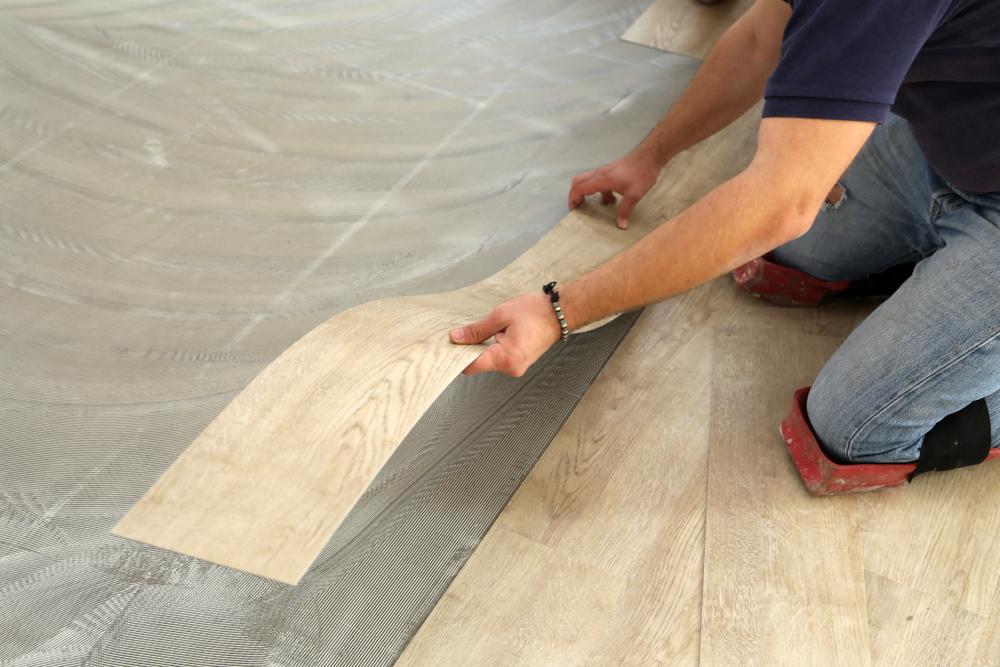
Luxury Vinyl Tile (LVT) flooring has become a popular choice due to its durability, affordability, and aesthetic appeal. The manufacturing process plays a crucial role in determining the final product’s stability and quality. Two main production methods are co-extrusion (commonly referred to as extrusion) and hot pressing. While both methods produce LVT flooring, their distinct processes lead to notable differences in performance.
Understanding the Manufacturing Processes
Co-Extrusion (Extruded LVT)
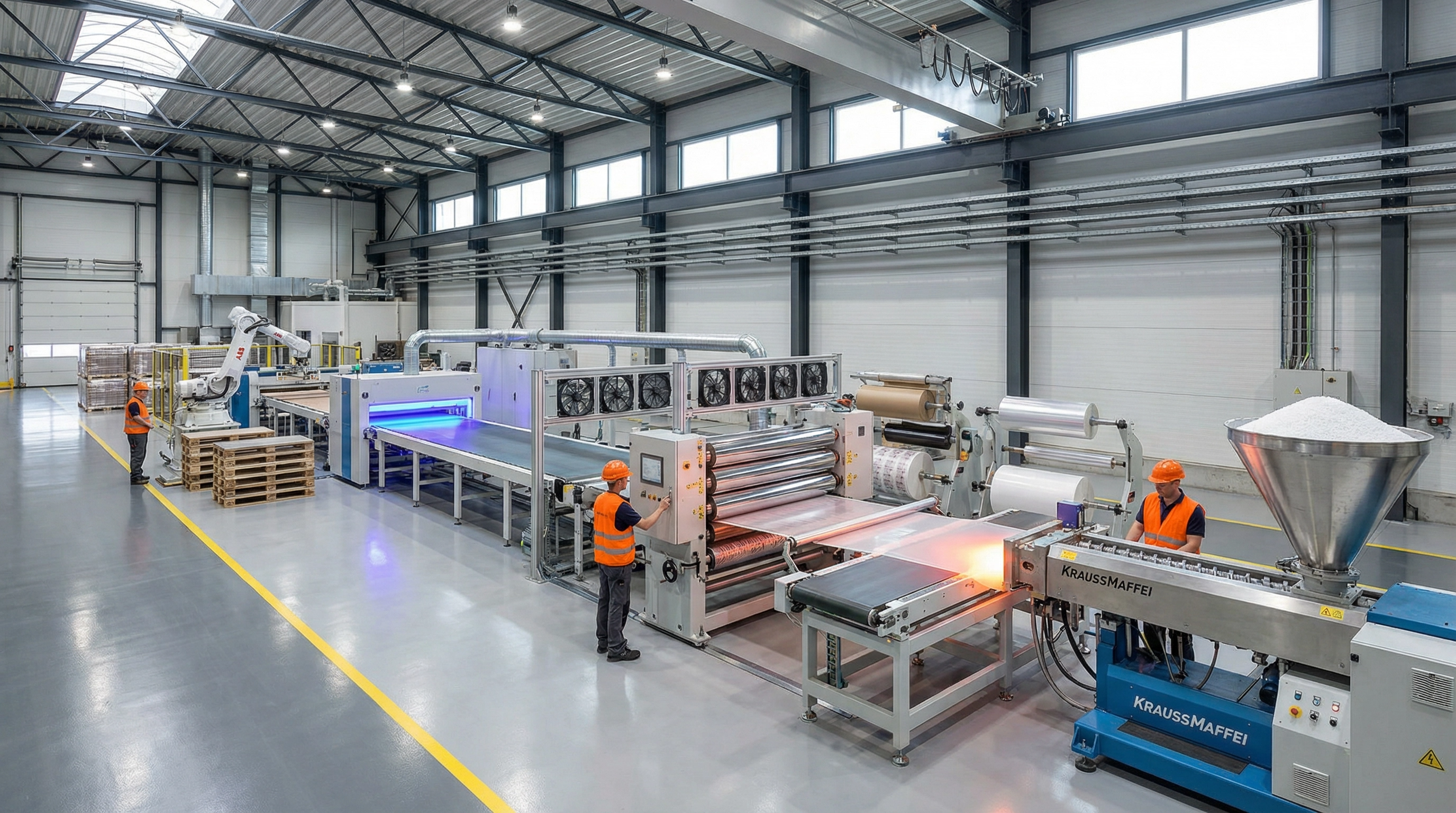
Co-extrusion is a continuous, high-efficiency manufacturing process where layers are formed and bonded in a single production line.
- Process: Simultaneous extrusion of vinyl backing, printed decorative film, wear layer, and protective layer, fused under high heat and pressure into a solid tile.
- Pros: Faster, more efficient production; ideal for large-scale, cost-effective manufacturing.
- Cons: Rapid cooling can introduce internal stresses, potentially affecting long-term dimensional stability.
Hot Pressing (The Premium Standard)
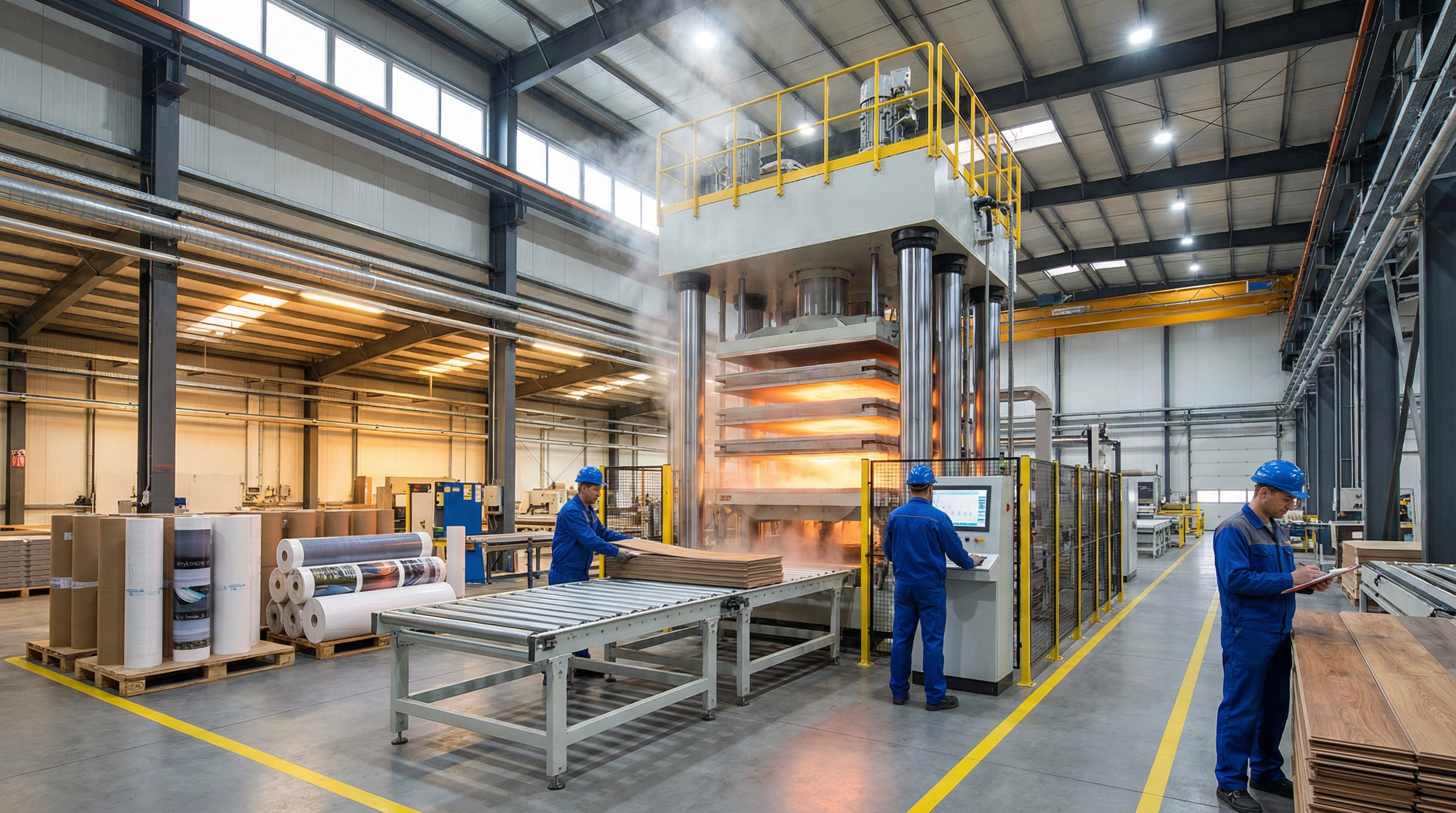
Hot pressing is a slower, more labor-intensive process where preassembled layers are bonded using batch-oriented press technology.
- Process: Preassembled layers are bonded under controlled heat and pressure for a cohesive, high-performance product.
- Pros: Slower, controlled process reduces internal stresses and ensures a uniform, stable floor.
Stability and Quality Comparison
The manufacturing differences directly impact long-term performance. Hot-pressed LVT generally exhibits superior stability and quality compared to extruded options.
- Dimensional Stability: Ability to maintain shape under temperature or moisture changes. Hot pressing provides better stability due to controlled bonding.
- Quality and Durability: Hot-pressed LVT is more durable and flexible, resisting cracking and layer separation, even on uneven subfloors.
- Premium Aesthetics: Allows for superior texture registration, such as Embossed-in-Register (EIR), matching texture to wood grain for a realistic look.
Summary Comparison
| Feature | Extruded LVT | Hot-Pressed LVT |
|---|---|---|
| Manufacturing | Simultaneous extrusion of multiple layers | Preassembled layers bonded with heat and pressure |
| Speed/Efficiency | Faster, higher production rates | Slower, more labor-intensive |
| Cost | Generally less expensive | Generally more expensive |
| Dimensional Stability | Good, but prone to internal stresses | Superior, due to controlled bonding |
| Durability | Durable | More durable, stronger layer bonding |
| Flexibility | Good | Better, less prone to cracking on uneven surfaces |
| Texture | Standard | Allows for premium registration (EIR) |
Conclusion
While extruded LVT offers a cost-effective option, hot-pressed LVT provides superior stability, durability, and premium aesthetics. For applications where long-term performance and realistic finishes matter, hot-pressed LVT is the preferred choice.
Discover the Benefits of Our Vinyl Flooring
Learn why Finfloor’s vinyl flooring is the perfect choice for durability, style, and long-lasting performance in your home or commercial space.