
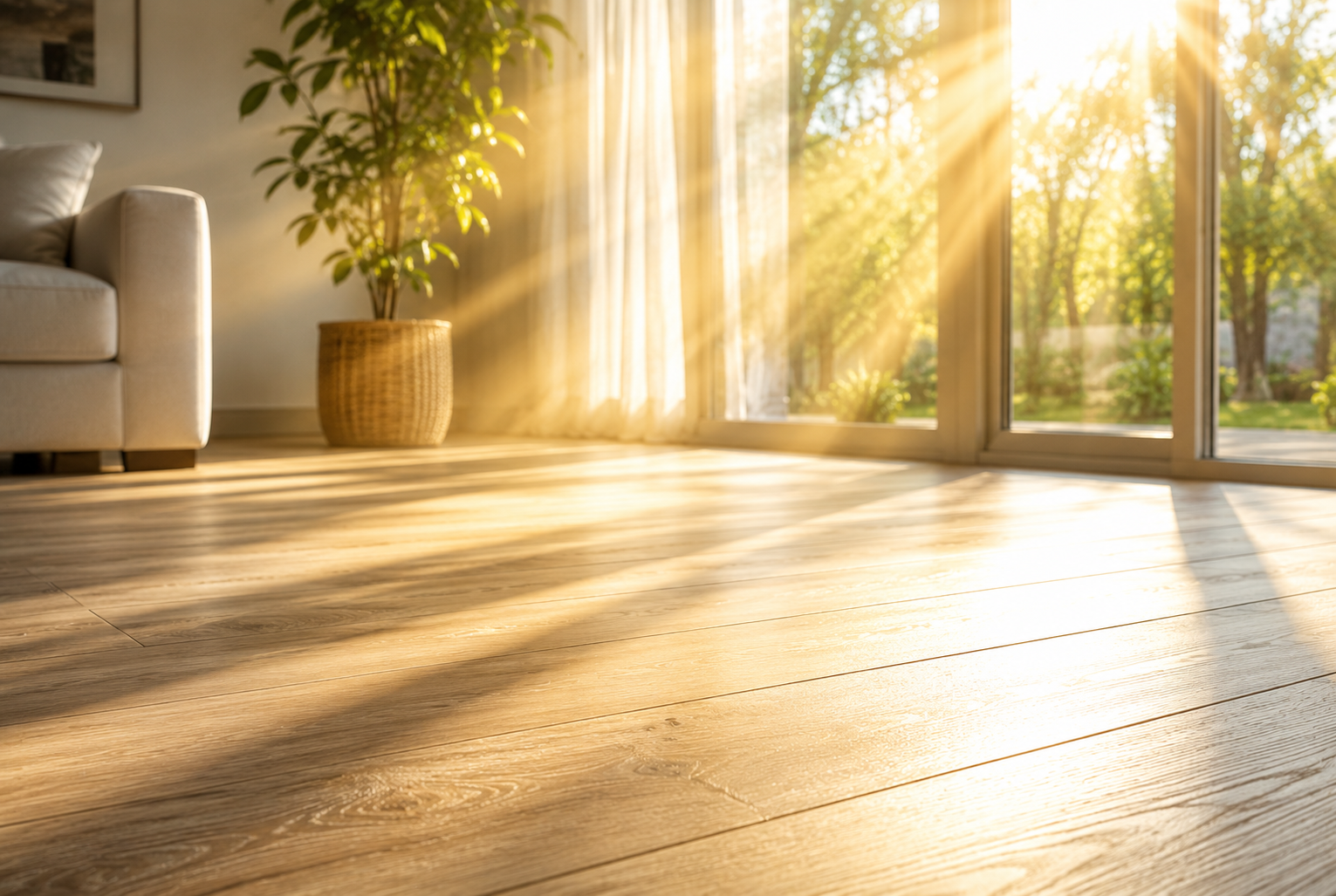
Flooring Temperature Comparison: Direct Sunlight and Material Limits
Understanding Heat Exposure for Laminate, SPC, Glue-Down LVT, Ceramic and Porcelain Flooring
When choosing flooring for your home or commercial space, durability is often one of the biggest considerations. However, one factor that is frequently overlooked is heat exposure, particularly in rooms with large windows, sliding doors or north-facing glazing where direct sunlight can dramatically increase floor surface temperatures.
While modern flooring products are engineered for everyday living, every flooring material has recommended operating temperature limits. Understanding these limits can help prevent avoidable damage and ensure your floor performs as intended for many years.
Why Does Direct Sunlight Matter?
Many people assume that if the room temperature is comfortable, the floor will be too. Unfortunately, this isn’t always the case.
When sunlight passes through glass it creates a greenhouse effect, causing floor surfaces to become significantly hotter than the surrounding air. Independent research has shown that floor surface temperatures in direct sunlight can exceed 49°C, and in extreme cases may reach 60°C or higher, especially on darker coloured flooring.
Quick Temperature Snapshot
Laminate
27°C
Some manufacturers allow up to 29–30°C.
SPC
27–30°C
More stable than traditional vinyl, but still requires protection.
Glue-Down LVT
27–29.4°C
Adhesive performance may be affected by excessive heat.
Ceramic & Porcelain
32°C+
Excellent heat resistance and UV stability.
Explore Flooring Types
Laminate Flooring
Laminate flooring is designed to perform within controlled indoor conditions.
Recommended maximum surface temperature:
- 27°C
- Some manufacturers allow up to 29–30°C
When exposed to temperatures above these limits for prolonged periods, laminate flooring may experience:
- Expansion and contraction
- Warping or buckling
- Joint separation
- Surface fading from UV exposure
- Locking system failure
For optimum performance, indoor temperatures should generally remain between 15°C and 27°C, with relative humidity between 30% and 60%.
SPC Flooring
Stone Plastic Composite flooring, commonly known as SPC, offers greater dimensional stability than traditional vinyl flooring thanks to its rigid mineral core.
Recommended maximum surface temperature:
- 27°C
- Some manufacturers permit up to 30°C
Although SPC performs exceptionally well under normal conditions, excessive heat can still result in:
- Material degradation
- Expansion
- Joint stress
- Softening of adhesives where applicable
SPC is more heat resistant than conventional vinyl but is not immune to prolonged extreme temperatures.
Glue-Down LVT Flooring
Glue-down Luxury Vinyl Tile relies on both the flooring material and the adhesive system working together.
Recommended maximum surface temperature:
- 27°C–29.4°C
Excessive heat may cause:
- Adhesive breakdown
- Curling
- Edge lifting
- Dimensional movement
- Loss of bond to the subfloor
Because adhesives are particularly sensitive to heat, maintaining recommended surface temperatures is essential for long-term performance.
Ceramic and Porcelain Tiles
Ceramic and porcelain tiles are manufactured by firing clay at extremely high temperatures, giving them outstanding heat resistance.
Unlike laminate and resilient flooring, ceramic and porcelain can comfortably tolerate temperatures well above 32°C, with many products capable of handling significantly higher temperatures without structural damage.
Benefits include:
- Excellent thermal stability
- Minimal expansion
- High resistance to UV exposure
- Exceptional durability in sun-exposed areas
This makes ceramic and porcelain an excellent option for areas subjected to intense solar heat.
Temperature Comparison
| Flooring Type | Recommended Maximum Surface Temperature | Performance in Direct Sunlight |
|---|---|---|
| Laminate | 27°C, up to 30°C for some products | High risk of damage if exceeded |
| SPC | 27°C, up to 30°C for some products | Better stability but still requires protection |
| Glue-Down LVT | 27°C–29.4°C | Adhesive performance may be compromised |
| Ceramic Tile | Above 32°C | Excellent heat resistance |
| Porcelain Tile | Above 32°C | Excellent heat resistance |
| Direct Sunlight Through Glass | 49°C–60°C+ | Exceeds recommended limits for most resilient flooring |
Protecting Your Flooring
Fortunately, there are several simple ways to reduce the effects of excessive solar heat:
Install Window Coverings
Blinds, curtains or external shading can significantly reduce solar heat gain during the hottest parts of the day.
Apply UV-Blocking Window Film
Modern window films help reduce both ultraviolet radiation and solar heat while maintaining natural light.
Use Appropriate Rugs Carefully
Avoid placing heavy, non-breathable rugs over flooring in direct sunlight, as trapped heat can further increase surface temperatures.
Consider Room Orientation
Large north- or west-facing windows can create prolonged heat exposure. Where possible, incorporate external shading or architectural design features that reduce direct solar gain.
Follow Manufacturer Guidelines
Always adhere to the installation and operating recommendations supplied by the flooring manufacturer to protect your warranty.
The Bottom Line
Every flooring material has operating limits.
While laminate, SPC and glue-down LVT are designed for excellent indoor performance, they should not be exposed to prolonged surface temperatures above their recommended limits. Direct sunlight through glass can easily exceed these thresholds, potentially leading to movement, warping, adhesive failure or premature wear.
By contrast, ceramic and porcelain tiles offer significantly greater resistance to heat and UV exposure, making them particularly suitable for areas with intense sunlight.
With thoughtful design, proper shading and adherence to manufacturer recommendations, you can enjoy beautiful, long-lasting flooring regardless of your chosen material.
Frequently Asked Questions
Can direct sunlight damage laminate flooring?
Yes. Prolonged direct sunlight can raise the floor surface temperature above the recommended limit, which may cause expansion, contraction, warping, joint stress or fading.
Is SPC flooring suitable for sunny rooms?
SPC offers greater dimensional stability than traditional vinyl flooring, but it still has recommended temperature limits and should be protected from prolonged extreme heat.
Why is glue-down LVT sensitive to heat?
Glue-down LVT depends on adhesive performance. Excessive heat can weaken the bond, potentially causing curling, edge lifting, movement or loss of adhesion.
Are ceramic and porcelain tiles better for direct sunlight?
Ceramic and porcelain tiles offer excellent heat resistance and UV stability, making them well suited to areas exposed to intense sunlight.
How can I reduce heat exposure on my floor?
Use blinds, curtains, external shading, UV-blocking window film and avoid heavy non-breathable rugs in areas exposed to direct sunlight.
Need Advice on Flooring for a Sun-Filled Space?
Our team can help you choose the most suitable flooring solution for your project and provide guidance on installation, maintenance and protecting your investment for years to come.