
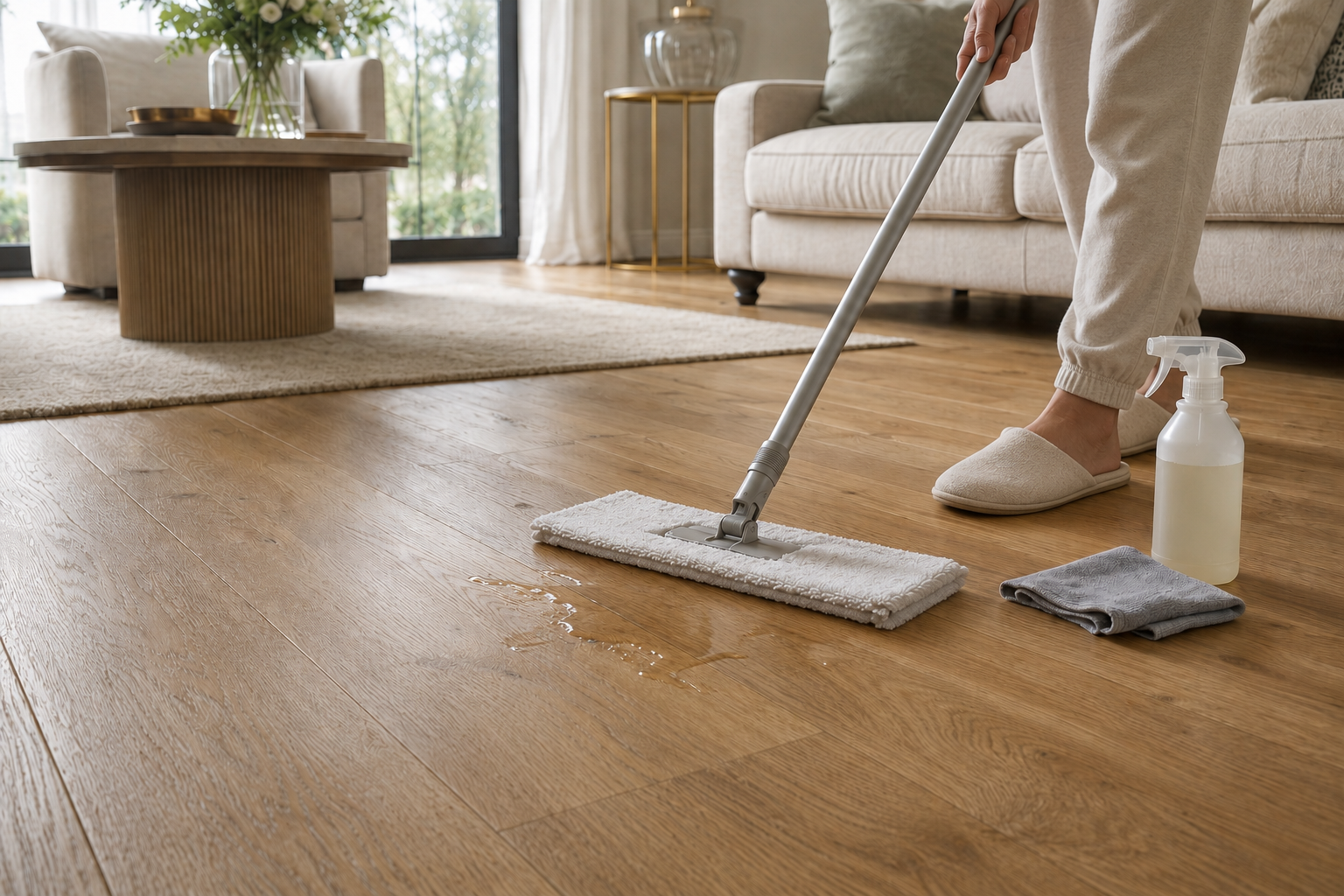
The Ultimate Guide to Cleaning and Maintaining Your Floors
Expert care advice for LVT glue-down vinyl, SPC and laminate flooring
What Is the Best Way to Clean LVT, SPC and Laminate Flooring?
The safest method is to remove loose grit first and then clean the floor with a flat microfibre mop, minimal moisture and a manufacturer-approved pH-neutral cleaner. Avoid steam mops, wax, oil-based soaps, abrasive pads, bleach, ammonia and excessive water.
Cleaning and maintaining LVT, SPC and laminate flooring correctly is essential if you want your floors to remain beautiful for years. These modern flooring options are valued for their durability, realistic appearance and low-maintenance performance.
However, using the wrong products or too much water can leave floors looking dull, cloudy, sticky or streaky. The secret is not cleaning harder—it is cleaning smarter.
Understanding What You Are Cleaning
The way a floor is constructed determines how it should be cleaned. Although LVT, SPC and laminate share several care requirements, each has specific vulnerabilities.
LVT Glue-Down Vinyl
LVT consists of a resilient backing, decorative film and protective wear layer. It is bonded directly to the subfloor for stability.
Its factory-sealed surface does not require waxing, polishing or oil treatments.
SPC Flooring
SPC features a rigid stone-plastic composite core and is generally installed using a click-lock system.
Although highly water-resistant, excessive moisture and heat can affect the joints and protective surface.
Laminate Flooring
Laminate has a durable surface layer over a high-density fibreboard core.
Water entering the joints can affect the HDF core and cause permanent swelling, lifting or warping.
Why Floors Look Dirty After Mopping
If a floor looks hazy, sticky or streaky immediately after cleaning, the problem is usually the cleaning product or method—not the flooring.
Many cleaners contain surfactants, oils, waxes or polymers that do not evaporate completely. On sealed LVT, SPC and laminate surfaces, this product remains on the wear layer and dries into a thin film.
Each cleaning session can add another layer of residue. The resulting surface attracts dust, dirt and pet hair, making the floor appear dirty again soon after it has been mopped.
The Most Common Floor-Cleaning Mistakes
| Mistake | Why It Happens | Possible Consequence |
|---|---|---|
| Using wax or “shine” products | They are marketed as finish enhancers. | Creates a cloudy, sticky film that attracts dirt. |
| Using oil-based soaps | They are associated with traditional wood care. | Leaves a dull residue on the sealed wear layer. |
| Using too much cleaner | More soap is mistakenly assumed to clean better. | Excess detergent dries into streaks and residue. |
| Mopping with dirty water | The water or mop pad is not changed frequently. | Grime is spread across the floor instead of removed. |
| Skipping the dry sweep | The cleaning process is rushed. | Loose dirt becomes muddy and dries into streaks. |
| Using ammonia or bleach | They are perceived as powerful disinfectants. | May dull or chemically damage the protective surface. |
| Using steam mops | Steam is associated with deep cleaning. | Heat and moisture may damage seams, joints or cores. |
| Using abrasive pads | They are used to remove stubborn marks. | Permanently scratches and dulls the wear layer. |
Daily Floor-Cleaning Routine
Sand, grit and loose dirt act like fine sandpaper underfoot. Removing them regularly protects the wear layer from gradual scratching.
Dry Sweep or Vacuum
Use a soft-bristle broom, flat microfibre dust mop or vacuum fitted with a hard-floor attachment. Switch off the rotating beater bar, as stiff bristles may scratch the surface.
Clean Spills Immediately
Blot spills with a clean, absorbent cloth. Follow with a barely damp microfibre cloth when necessary and dry the area immediately.
Prompt spill removal is especially important for laminate flooring.
Weekly Cleaning: Five Safe Steps
- Dry sweep first. Remove dust, sand, hair and grit before introducing any moisture.
- Use a flat microfibre mop. It holds less water than a string mop and can be wrung out until only slightly damp.
- Select a pH-neutral cleaner. Choose a product approved for your specific flooring and follow its dilution instructions.
- Use the mist-and-wipe method. Apply a small quantity to the mop pad or lightly mist a manageable section.
- Rinse if required. If residue remains, make a final pass with a clean microfibre pad barely dampened with plain water.
Floor-Specific Care Guidelines
LVT Glue-Down Vinyl
Daily: Sweep or vacuum and clean spills promptly.
Weekly: Damp mop using a pH-neutral vinyl cleaner. A two-bucket method helps prevent dirty water from being reapplied.
Marks: Use a manufacturer-approved spot cleaner and a soft white cloth.
SPC Flooring
Daily: Dry dust mop or vacuum with a suitable hard-floor attachment.
Weekly: Damp mop with a pH-neutral vinyl cleaner. Wring the mop thoroughly and avoid flooding the click joints.
Marks: Follow the manufacturer’s recommendations for grease, scuffs and stubborn stains.
Laminate Flooring
Daily: Sweep or vacuum and dry spills immediately.
Weekly: Use a laminate-approved cleaner with a mop pad that is barely damp. Clean in the direction of the planks.
Marks: Use suitable laminate spot-cleaning methods and dry the area promptly.
Products and Practices to Avoid
| Product or Practice | Why It Can Be Harmful | Most Affected Floors |
|---|---|---|
| Steam mops | Heat and moisture may damage seams, cores and joints. | SPC and laminate |
| Wax and floor polish | Creates a cloudy, slippery, dirt-attracting film. | LVT, SPC and laminate |
| Oil-based soap | Leaves residue on factory-sealed surfaces. | LVT, SPC and laminate |
| Bleach or ammonia | May degrade or permanently dull the wear layer. | LVT, SPC and laminate |
| Undiluted vinegar | Repeated acidic exposure may dull the finish. | LVT, SPC and laminate |
| Abrasive pads | Scratches the protective wear layer. | LVT, SPC and laminate |
| Excessive water | May enter seams and cause swelling or joint damage. | Laminate especially |
| Dragging furniture | Can leave deep scratches and gouges. | All flooring types |
How to Remove Existing Cleaning Residue
If your floor already has a cloudy or sticky build-up, do not apply another polish or shine product. The existing residue must first be removed safely.
- Sweep thoroughly. Remove all loose dirt before applying moisture.
- Confirm the correct product. Use a manufacturer-approved residue remover suitable for your flooring.
- Test a small area. Apply the product in an inconspicuous location before treating the full floor.
- Work in small sections. Follow the instructions and avoid flooding the floor.
- Rinse and dry. Remove residue with a clean, barely damp microfibre pad and allow the floor to dry fully.
Preventative Floor Maintenance
- Place suitable doormats at entrances to trap dirt and moisture.
- Use felt pads beneath furniture legs.
- Lift furniture instead of dragging it across the floor.
- Keep pet nails trimmed to reduce scratching.
- Use blinds or curtains to manage intense direct sunlight.
- Clean spills promptly and never allow water to pool.
- Follow the product-specific care and warranty instructions.
Quick Floor-Care Schedule
| Task | Frequency | LVT | SPC | Laminate |
|---|---|---|---|---|
| Dry sweep or dust mop | Daily or as required | Yes | Yes | Yes |
| Clean spills | Immediately | Yes | Yes | Critical |
| Damp mop with an approved cleaner | Weekly or as required | Yes | Yes | Barely damp |
| Inspect felt pads | Every 6–12 months | Yes | Yes | Yes |
| Check for residue or haze | As required | Yes | Yes | Yes |
Frequently Asked Floor-Care Questions
What is the safest cleaner for LVT, SPC and laminate?
Use a manufacturer-approved pH-neutral cleaner formulated for your specific flooring type. Follow the dilution instructions and use only the recommended quantity.
Can I use a steam mop on laminate or SPC flooring?
Steam mops are generally not recommended. Heat and moisture can enter joints, affect click systems and cause swelling, distortion or damage.
Why does my floor look cloudy after mopping?
Cloudiness is commonly caused by excess cleaner, wax, oil-based soap or dirty mop water drying on the sealed wear layer.
Can I use vinegar on vinyl or laminate flooring?
Frequent use of acidic cleaning solutions may dull certain finishes. A manufacturer-approved pH-neutral cleaner is the safer routine option.
How often should LVT, SPC and laminate be mopped?
Dry dust removal can be performed daily or as required. Damp cleaning is normally needed weekly or when visibly dirty.
Can laminate flooring be cleaned with water?
Laminate should be cleaned with a barely damp—not wet—microfibre mop. Standing water and excessive moisture must be avoided.
Should LVT or SPC flooring be waxed?
No. LVT and SPC normally have factory-finished wear layers that do not require wax. Wax can create a cloudy and slippery surface.
Final Thoughts
LVT glue-down vinyl, SPC and laminate are durable, attractive and practical flooring choices when cared for correctly. The most common causes of hazy floors are excessive product, unsuitable cleaners and too much moisture.
Regular dry sweeping, prompt spill removal and occasional damp cleaning with a pH-neutral, manufacturer-approved cleaner will help preserve the floor’s appearance and performance.
Always consult the care and maintenance instructions supplied with your specific FINfloor product, as requirements and warranty conditions may differ.
Find the Right Floor for Your Home
Explore FINfloor’s laminate, luxury vinyl and SPC flooring collections, designed for beautiful and practical modern interiors.
Explore FINfloor